
"Do I really need a permit for a deck?" comes up on almost every consultation, usually right after we've discussed design and before we've talked price. It's a reasonable question — permitting adds time and cost to a project, and it's tempting to wonder if it's optional. In Pinellas County, for the vast majority of deck projects, it isn't.
What Generally Triggers a Deck Permit
As a general rule, any deck that attaches to your house, sits above a certain height off grade, or exceeds a certain size is going to require a building permit in Pinellas County. That covers the large majority of the decks homeowners actually build — a raised deck off a back door, a deck surrounding a pool, or any multi-level structure. Even a straightforward custom wood deck attached to the house almost always needs a permit; it's the connection to the home and the elevation that matter, not the decking material you choose. Larger multi-level and pool decks almost always require a permit and often engineered plans, given the added structural complexity. Small, freestanding, ground-level platforms are sometimes exempt, but the exact thresholds (height, square footage, and whether it's attached) are set by the local building department and can be revised, so we always recommend confirming the current requirements with the City of St. Petersburg or Pinellas County building division directly, or letting your contractor pull and confirm the permit as part of the project.
What the Permitting Process Actually Involves
For most residential decks, the process looks like this: submit plans (sometimes engineered plans, depending on size and height) for review, receive permit approval, build to those approved plans, and pass a series of inspections as construction progresses. This is one of the bigger variables in our deck cost guide — engineering and permit fees are a real line item, and how long approval takes affects your overall project timeline as well.
What Inspectors Typically Check
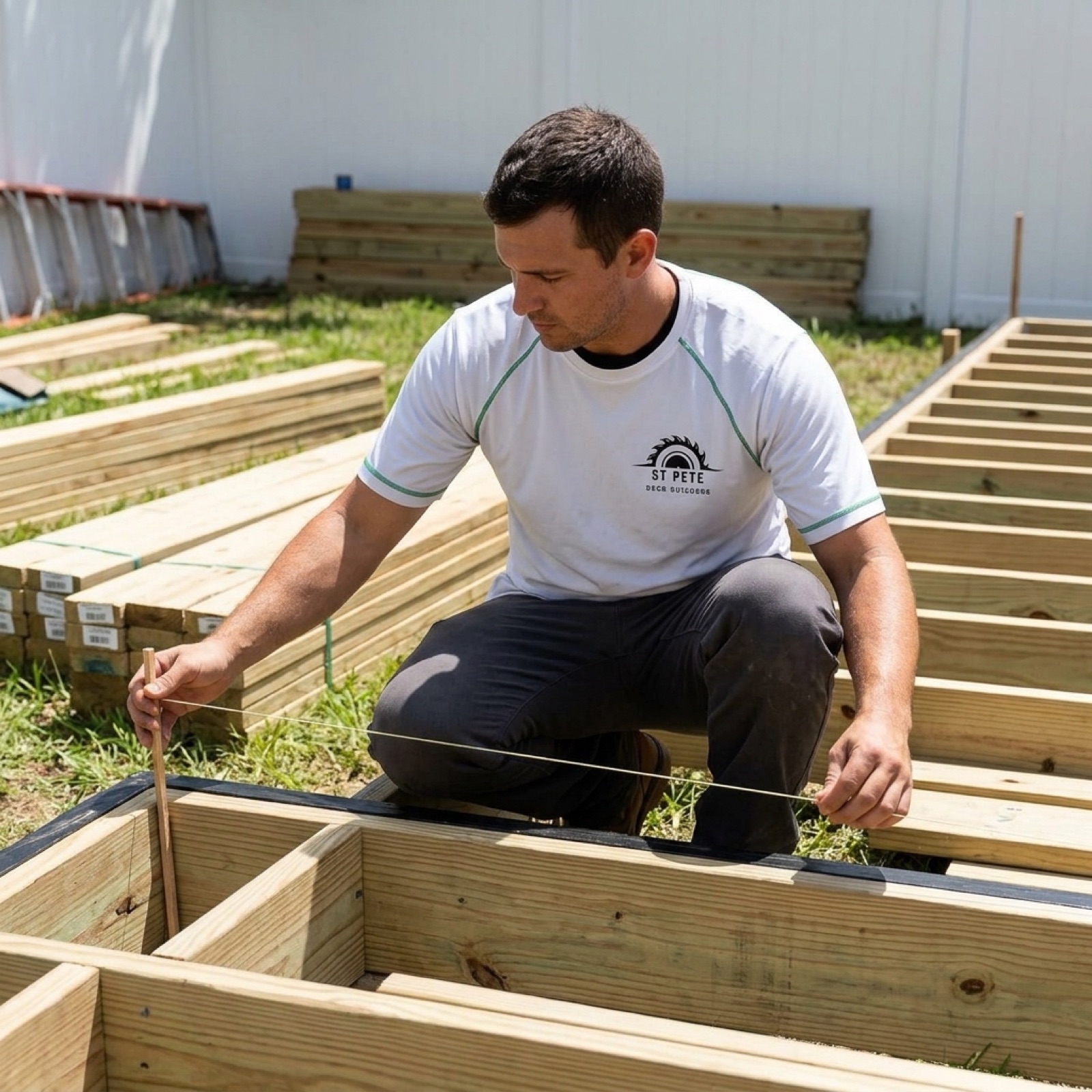
Inspections generally happen at key structural milestones rather than just once at the end. A footing inspection confirms the depth and placement of your posts before concrete goes in — this matters enormously in Florida, where soil conditions and wind-load requirements both factor into proper footing design. A framing inspection checks the ledger board attachment to the house, joist spacing, and hardware before decking goes down, since the ledger connection is one of the most common failure points on older, unpermitted decks. Depending on the scope, there may be additional inspections for electrical (deck lighting) or for guardrails and stair railings before final sign-off.
Why Skipping the Permit Is a Bad Trade
It's understandable why someone might want to skip the process — it adds time and cost. But unpermitted decks create real problems down the line. When you sell your home, an unpermitted structure can surface during the buyer's inspection or a title search, which can delay closing, require retroactive permitting, or even force removal of the deck. Homeowners insurance can also become a headache: if an unpermitted deck is involved in a claim, from storm damage to a structural failure, coverage can be denied. None of that is worth the time saved upfront.
We Handle the Permitting for You
Every deck we build in St. Petersburg or Clearwater includes permit drawings, submission, and inspection scheduling — you don't have to navigate the building department on your own.
📞 Call 813-590-4591Building an Existing Deck Onto a New One
If you're replacing or expanding an existing deck, the permit process usually still applies, and it's worth confirming whether the original structure was ever permitted in the first place — that comes up more often than you'd think on older Pinellas County homes. A licensed contractor pulling the permit for you means the paperwork, the plan review, and every inspection along the way are handled correctly the first time, which keeps your project moving instead of stalled waiting on a re-inspection.
The Bottom Line
Permit requirements can feel like red tape, but they exist for a reason that matters a lot in Florida: they confirm your deck can stand up to our storms, our soil, and our building code, and they protect your investment when it's time to sell. Confirm the specifics with your local building department, or better yet, work with a contractor who handles that step as part of the build so you never have to think about it.