
One of the biggest reasons homeowners choose composite decking is that it doesn't demand the sanding, sealing, and staining that wood requires. That's true — but "low-maintenance" doesn't mean "zero-maintenance." A little bit of routine care goes a long way toward keeping a composite deck performing well through years of St. Petersburg humidity, sun, and salt air.
Wash It Periodically to Prevent Mold and Mildew Film
Even mold-resistant composite boards can develop a thin surface film of pollen, dirt, and mildew over time, especially in shaded areas or spots that don't get much direct sun and airflow. A simple wash with a garden hose, mild soap, and a soft-bristle broom every few months — more often in shaded, humid corners — keeps that film from building up and prevents the deck from looking dull. Avoid pressure washers on the highest settings, which can etch or damage the board surface; a moderate setting held at a reasonable distance is safer if you prefer that method.
Check Fasteners and Hardware for Coastal Corrosion
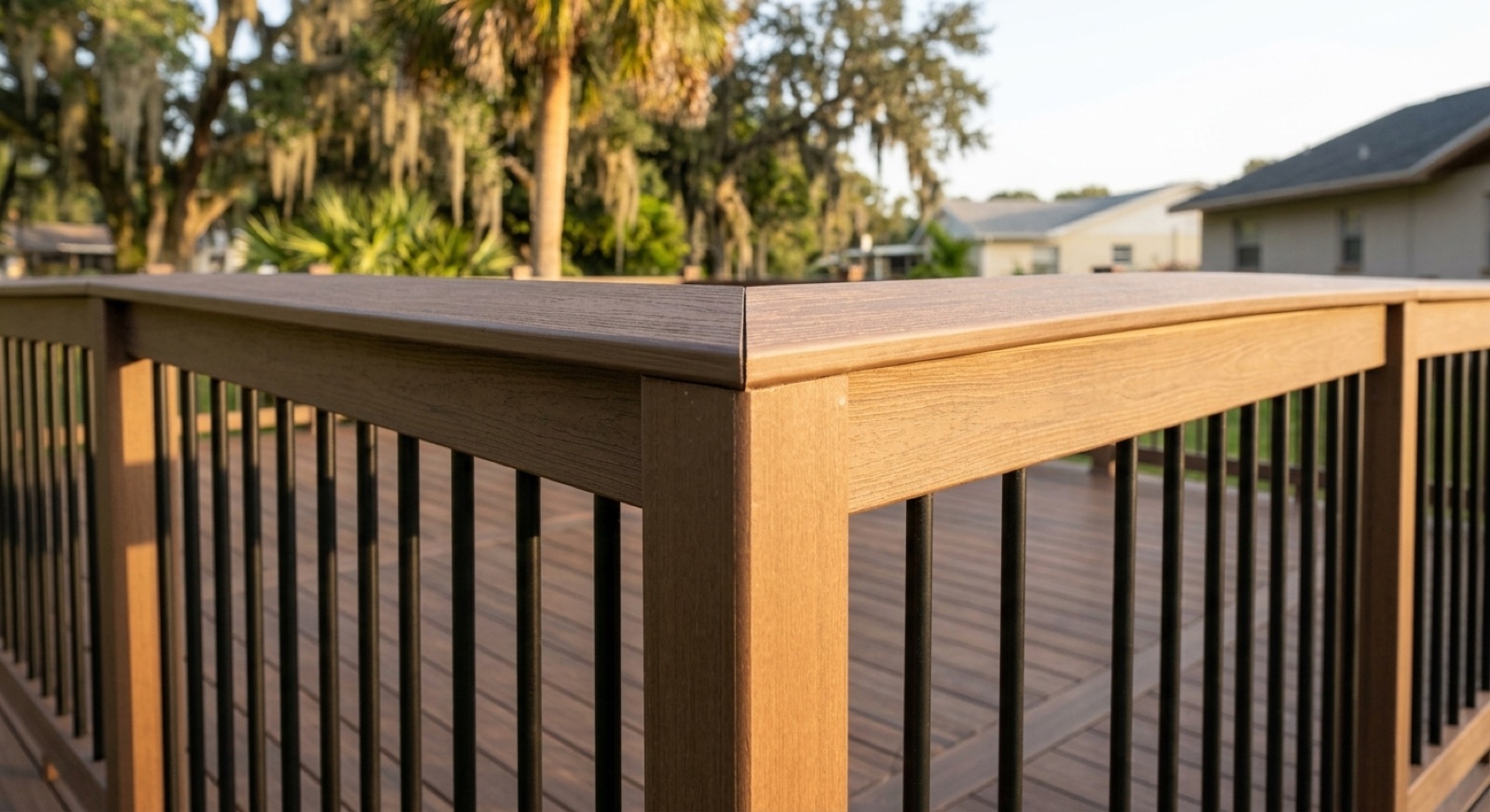
Composite boards themselves don't rust or corrode, but the screws, brackets, and structural hardware underneath and around them can, particularly in homes near the bay or Gulf where salt-laden air accelerates corrosion. Once or twice a year, it's worth taking a walk around the deck to look at railing connections, stair hardware, and any visible fasteners for early rust or looseness. Catching a corroding fastener early is a five-minute fix; ignoring it can eventually turn into a structural repair.
Keep Gaps and Drainage Areas Clear
Composite boards are typically installed with small gaps between them for drainage and expansion. Over time, leaves, pine needles, and dirt can pack into those gaps and into the drainage space underneath the deck, trapping moisture against the substructure. Sweeping debris out of the gaps and clearing the area beneath the deck periodically helps water shed the way it's designed to, which matters even more during Florida's heavy rainy season.
Rinse Off Salt Residue Near the Water
If your home is close to the beach or the bay, salt spray can leave a residue on outdoor surfaces, composite decking included. An occasional rinse — the same simple hose-and-soap routine mentioned above — keeps that residue from accumulating and helps hardware and railings last longer too.
Building New or Maintaining What You Have?
Serving St. Petersburg and Treasure Island — from new composite builds to repairs on decks that need some attention.
📞 Call 813-590-4591When Maintenance Turns Into Repair
Routine cleaning and hardware checks handle the vast majority of composite deck upkeep, but structural issues — a soft spot in the framing, a failing ledger connection, or damage from a storm — are a different category of work. If a walk-around inspection turns up something beyond surface cleaning, our deck repair and restoration team can assess it and make sure small issues don't turn into bigger ones.
Comparing Maintenance to Wood
It's worth remembering what the alternative looks like: a wood deck in this climate typically needs full sanding and resealing every one to two years just to stay protected, on top of the same hardware and drainage checks composite needs. We cover that full comparison, cost included, in our composite vs. wood decking guide. Composite's maintenance list is short, but it's not empty — and treating it that way is exactly how a $10,000-plus investment stays looking new for 25-plus years instead of showing its age early. Higher-tier capped composite and PVC products generally need even less attention than budget composite lines, which is one more factor worth weighing in our guide to comparing composite decking brands.
A Simple Seasonal Habit
Most homeowners find it easiest to build composite deck care into a seasonal rhythm — a wash and hardware check each spring before the rainy season ramps up, and another once things dry out in the fall. It takes an afternoon, and it's the single best thing you can do to protect the investment.
What to Avoid
A few habits can do more harm than good. Skip harsh solvents, bleach in high concentrations, or abrasive scrub pads, which can dull a board's finish or damage the protective cap on premium composite lines — plain soap and water handles the vast majority of everyday grime. Avoid dragging heavy furniture, planters, or grills across the surface, since composite boards can scuff under enough friction even though they resist splintering the way wood does. And resist the temptation to power-wash on the highest pressure setting up close; it's an easy way to strip texture from the board surface even though the material itself is durable.
Furniture and Rugs
Outdoor rugs and furniture pads are worth using thoughtfully on a composite deck in Florida. Anything left in one spot for extended periods without airflow underneath — a rug, a planter tray, a cooler — can trap moisture against the board and create the exact humid, low-airflow conditions that encourage surface mildew. Rotating furniture and rugs occasionally, and choosing pads or feet that allow some airflow, helps avoid uneven wear patterns and keeps the whole deck aging evenly.