
Every deck project in St. Petersburg eventually comes down to this decision: wood or composite? Both build a beautiful deck. But our climate — the year-round humidity, the intense UV, the salt-tinged air near the bay and Gulf — treats the two materials very differently, and that difference only gets more obvious the longer you own the deck.
How Wood Holds Up in Florida's Climate
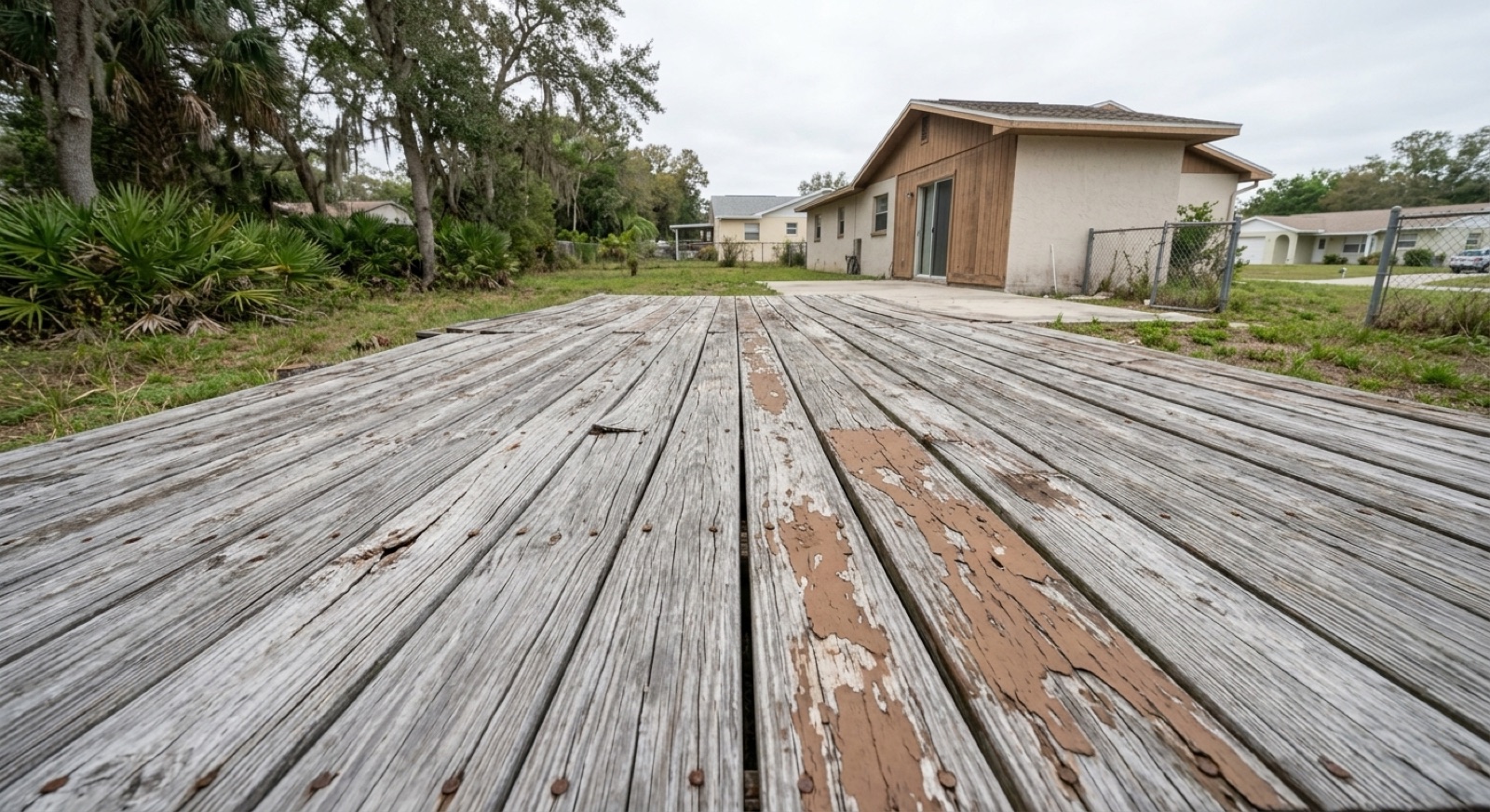
Pressure-treated wood is a proven, budget-friendly choice, and a well-built custom wood deck can look great for years. But wood is porous, and Florida gives it every opportunity to soak up moisture — heavy summer rain, thick humidity, and dew that barely evaporates some mornings. Left unsealed, wood in this climate is prone to warping, cupping, and surface mold or mildew, especially in shaded or low-airflow spots. To keep it looking good and structurally sound, most homeowners need to clean, sand, and reseal or restain a wood deck every one to two years.
How Composite Handles the Same Conditions
Composite decking is engineered specifically to shrug off what wood struggles with. It doesn't absorb water the way wood does, so it resists the swelling, rot, and mold growth that humidity encourages. It doesn't fade or bleach out the way some wood species do under intense Gulf coast sun, and capped composite boards in particular resist staining from pollen, tannins, and everyday spills. There's no annual sealing or staining cycle — periodic washing is the extent of the routine care, which we cover in detail in our composite deck maintenance guide.
The Real Cost Comparison: Year One vs. Year Fifteen
Composite costs more upfront — often noticeably more per square foot than pressure-treated wood, as we break down in detail in our deck cost guide. If you only look at the day-one number, wood wins. But stretch the comparison out to 10 or 15 years and the picture shifts. Add up the cost of stain, sealant, and the labor to apply them every year or two, plus the eventual repair or replacement of boards that warp, split, or rot despite maintenance, and wood's total cost of ownership climbs steadily while composite's stays close to flat. For homeowners planning to stay in their home for a decade or more, that gap is worth taking seriously — and it's a big part of why composite and Trex decks have become the default recommendation for our beachside clients in places like Madeira Beach.
What About Existing Wood Decks That Are Struggling?
If your current wood deck already has soft boards, loose fasteners, or visible rot, that's usually a maintenance or age issue rather than a reason to write off wood as a category — but it's also a natural point to reconsider your material. Our deck repair and restoration team can assess whether your structure is sound enough to re-deck in composite, or whether a full rebuild makes more sense.
So Which Should You Choose?
There's no universally "right" answer — it depends on your budget, your timeline for the home, and how much annual upkeep you're willing to take on. But for most St. Petersburg homeowners, especially those closer to the water where salt air and humidity are most aggressive, capped composite decking hits the practical sweet spot: a higher upfront investment that pays off in far less maintenance and a longer, more stable lifespan. If budget is the deciding factor and you're comfortable with a maintenance routine, a well-built wood deck is still a completely reasonable choice — just go in with clear eyes about the sealing schedule ahead of you.
Not All Composite Is the Same
If you do lean toward composite, the category itself has tiers worth understanding — capped vs. uncapped boards, budget vs. premium lines, and how warranty length tracks with price. We walk through those trade-offs in our guide to comparing composite decking brands.
What About Hybrid Approaches?
Some homeowners split the difference by using composite decking for the main surface — the part that takes the most sun and foot traffic — while keeping wood accents on structures like pergola beams or a feature wall, where sealing is a smaller, occasional task rather than an annual whole-deck project. It's a reasonable way to get the warm, natural look of real wood in a few spots without taking on the full maintenance burden across the entire deck surface.
Don't Overlook the Substructure
Whichever decking material you choose, remember that the boards are only the visible layer. The framing underneath — whether it's pressure-treated lumber or a coated steel system — has to be built to Florida wind-load code and protected from the same humidity and salt air that affects the surface material. A composite deck on an undersized or poorly protected frame won't perform the way the marketing promises, and a wood deck built on a properly engineered, well-ventilated structure will hold up far better than one thrown together without attention to airflow and drainage. The material decision matters, but so does the builder underneath it.
Not Sure Which Material Fits Your Project?
We'll bring samples of both to your St. Petersburg home and talk through the honest trade-offs for your budget and yard.
📞 Call 813-590-4591Whichever direction you lean, the material decision is only half the project — the framing, fasteners, and structure underneath matter just as much in a coastal climate. That's the part we handle for every deck we build, wood or composite.