
Once a homeowner decides to go with composite decking over a custom wood deck, the next question is usually which product line to choose. Trex is the name most people already know, and it's a fair example of the premium end of the category, but it's far from the only option — and picking the right one has more to do with understanding tiers than memorizing brand names. If you're still weighing whether composite makes sense for your home at all, our composite vs. wood decking comparison is the right starting point before you get into brand-level decisions.
Think in Tiers, Not Just Brand Names
Composite and PVC decking products generally fall into a few broad categories, and understanding those categories will get you further than trying to rank individual brands against each other.
Uncapped / Lower-Grade Composite
This is the entry point into composite decking — a wood-plastic blend without a protective outer shell. It's the most budget-friendly composite option and still outperforms untreated wood in some respects, but it's more susceptible to staining, fading, and moisture absorption at the surface than capped products. In a climate as demanding as St. Petersburg's, this tier tends to show its age faster than the categories above it.
Capped Composite
Capped composite adds a protective polymer shell around the wood-plastic core, which significantly improves resistance to fading, staining, scratching, and moisture. This is the tier most premium product lines — Trex included — occupy, and it's the practical sweet spot for most Tampa Bay homeowners: meaningfully better performance than uncapped composite for a moderate step up in price.
PVC Decking
Fully synthetic PVC decking contains no wood fiber at all, which makes it the most resistant option to moisture absorption and organic decay. It tends to sit at the top of the price range and can look slightly different underfoot and in finish than wood-composite blends, which comes down to personal preference.
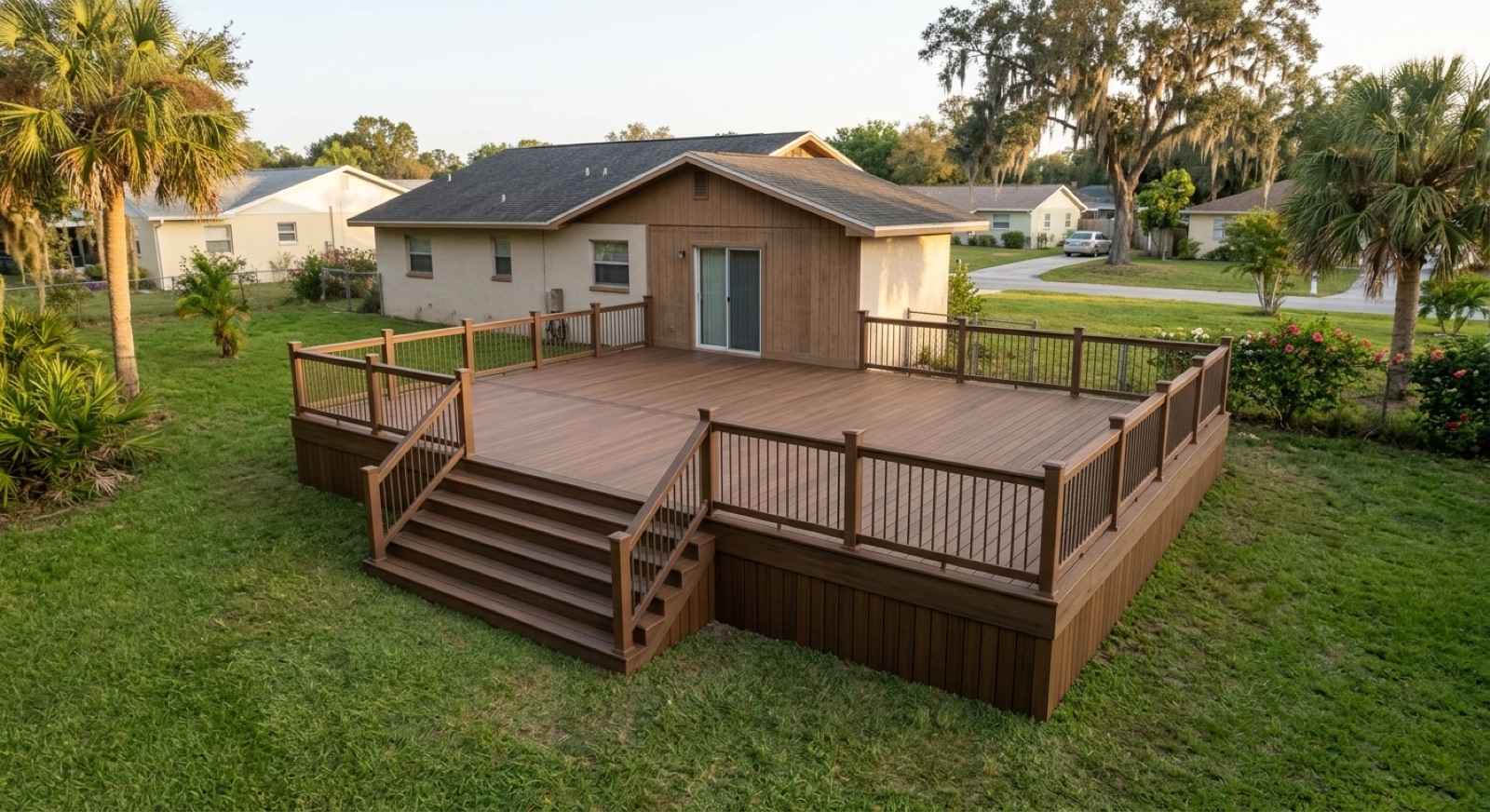
What Actually Differs Between Product Lines
Within any given tier, the meaningful differences between specific product lines come down to a handful of factors: price per square foot, the range of available colors and board profiles, fade and stain warranty length, and how the manufacturer backs its product if something goes wrong. Warranty length in particular is a useful shorthand for how confident a manufacturer is in their own product's durability — it's worth comparing across a few lines rather than assuming higher price always means longer coverage.
A Simple Framework for Choosing
Rather than trying to declare one brand universally "the best," it helps to match the decision to your priorities:
- Budget is the top priority: a quality uncapped composite line can still be a reasonable step up from pressure-treated wood.
- You want the best balance of cost and performance: capped composite is where most St. Petersburg homeowners land, and where Trex-tier products compete.
- You're prioritizing maximum moisture and fade resistance, budget aside: PVC decking is worth a look, especially for pool-adjacent decks that see constant sun and splash exposure.
If you're building a deck around a pool, fade resistance and heat underfoot become bigger factors — we cover those specifics in our guide to pool deck rules and materials.
See the Options in Person
We bring physical samples across multiple tiers and brands to your St. Petersburg home so you can compare color, texture, and warranty side by side.
📞 Call 813-590-4591Serving Homeowners Across the Region
We install composite decking across Pinellas County, from Seminole to Pinellas Park and everywhere in between, and we'll help you weigh brand and tier against your specific budget rather than pushing whatever happens to be easiest for us to source. Once you've settled on a product, proper installation and maintenance matter just as much as the brand you picked — our composite deck maintenance guide covers the simple upkeep that keeps any tier looking its best.
The Bottom Line
There's no single "best" composite decking brand for every homeowner — there's a best fit for your budget, your priorities, and how you plan to use the space. Understanding the tiers above puts you in a much stronger position to evaluate any specific product line a contractor recommends, Trex or otherwise.
Questions Worth Asking Before You Commit
When you're comparing quotes that include different composite lines, a few direct questions cut through most of the marketing noise. Ask what the fade-and-stain warranty actually covers, and for how many years — some warranties are prorated after an initial full-coverage period, which matters if a problem shows up down the road. Ask whether the board is capped on all four sides or only on the top and edges, since fully capped boards generally hold up better to cut ends and drilled fastener points exposed during installation. And ask to see or feel a physical sample rather than relying on a photo, since color and texture can look different in person than they do online.
Color and Style Considerations for St. Pete Homes
Beyond performance, color choice affects both heat absorption and how the deck reads against your home. Lighter gray and weathered-wood tones tend to stay cooler underfoot and pair well with the coastal, beach-cottage look common throughout St. Petersburg, while deeper browns can read as more traditional but absorb more heat in direct sun. Bringing a sample outside to view it against your actual siding and in your actual light — morning and afternoon — will tell you more than any brand's marketing photos.