
A pool deck has to do more than look good — in Florida's sun, it has to stay comfortable underfoot, handle constant splash and moisture, and meet pool safety requirements that a standard backyard deck doesn't. If you're planning a deck around a pool in St. Petersburg, here's what actually matters before you pick a material and finalize a layout.
Heat-Reflective and Cooler Decking Options
Dark, standard decking materials can get uncomfortably hot underfoot in direct Florida sun, especially right at pool's edge where there's often no shade at all. Lighter-colored composite decking and certain heat-reflective formulations are engineered to stay noticeably cooler than darker boards or bare concrete, which matters a lot for barefoot kids running from the pool to a towel. If comfort underfoot is a priority, it's worth asking specifically about a product's heat-reflective performance and choosing lighter tones for the sunniest sections of the deck.
Slip Resistance Matters More Here Than Anywhere Else
Every square foot of a pool deck is going to get wet, repeatedly, for the life of the deck — which makes slip resistance one of the most important specs to check. Textured composite decking designed with pool areas in mind performs very differently from smooth, glossy surfaces once water hits it. This is a case where it's worth asking your builder directly which product lines are rated or recommended for wet, high-traffic pool environments rather than assuming any composite board will do.
Pool Safety and Barrier Considerations
Florida takes residential pool safety seriously, and there are common code requirements around barriers, gates, and enclosures for pools — things like self-closing, self-latching gates and barrier height minimums show up frequently in local pool safety rules. The specifics can vary by jurisdiction and by whether the pool is new construction or an existing installation, so we always recommend confirming the current requirements with your local building department or a licensed pool contractor as part of your planning, particularly if your deck design incorporates gates, stairs, or access points near the pool.
Designing a Multi-Level Pool Deck
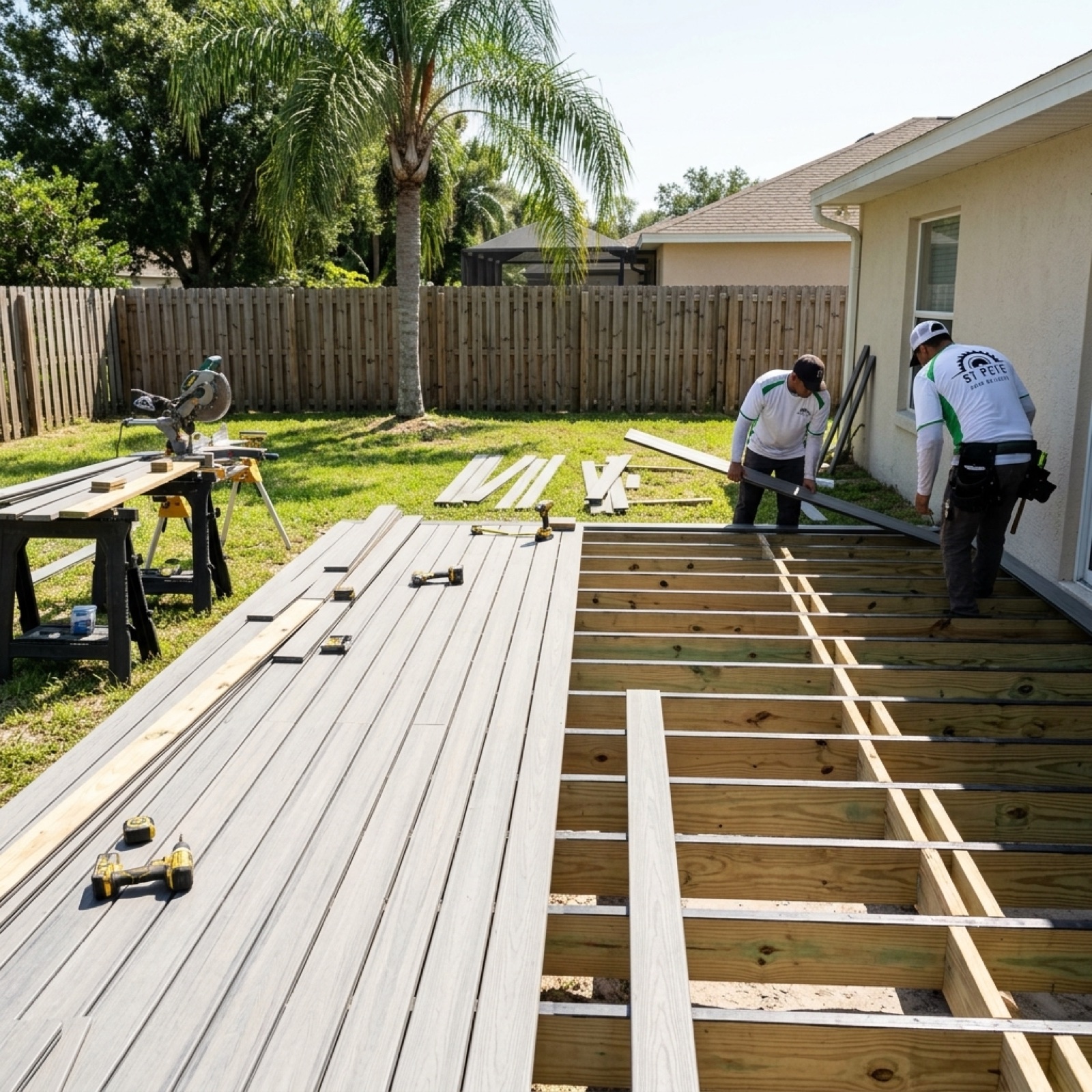
Pool decks are also where multi-level design tends to shine. A raised section for lounging or dining, a lower section closer to the water, and built-in steps between them can turn a flat pool surround into a real outdoor living space. This kind of layered layout is a big part of what we build through our multi-level and pool deck service — it takes more structural planning than a flat deck, but it makes far better use of the space around the pool.
Adding Shade Without Losing Pool Views
Full sun all day isn't always ideal, even at a pool. A well-placed screened porch or lanai section adjacent to open pool decking gives you a shaded, bug-free retreat without covering the whole pool area, which keeps sightlines to the water while giving everyone a break from direct sun during the hottest part of the day.
Planning a Pool Deck?
We design and build pool decks throughout St. Petersburg and South Pasadena with materials chosen specifically for wet, high-sun environments.
📞 Call 813-590-4591Choosing the Right Material Tier
Because pool decks face harsher, wetter conditions than a standard backyard deck, it's worth leaning toward a higher tier of composite or PVC decking than you might choose elsewhere on the property — we break down those tiers in our guide to comparing composite decking brands. And once your pool deck is finished, keep in mind it will need a bit more frequent attention to salt, chlorine residue, and moisture than a typical deck — worth pairing with a screened section if bugs near standing water are a concern, which we cover in our comparison of screened porches vs. open decks.
The Bottom Line
A pool deck built with the right material tier, proper slip resistance, and code-compliant safety features isn't just a nicer space — it's a safer one. Confirm the current barrier and safety requirements with your local building department, choose decking rated for constant moisture, and design the layout to fit how your family actually uses the pool.
Drainage Is Its Own Design Challenge
A pool deck sheds far more water than a typical backyard deck — splash-out, pool overflow during heavy rain, and routine hosing down all add up. Proper slope and drainage planning underneath and around the decking keeps water moving away from the structure instead of pooling against the framing or creating standing puddles that become a slip hazard themselves. This is one of the areas where experience with pool-specific builds matters: a deck designed like a standard backyard structure but installed around a pool can develop drainage problems that a purpose-built pool deck design avoids from the start.
Permits Apply Here Too
It's worth remembering that pool decks are subject to the same permitting requirements as any other attached or elevated deck in Pinellas County, often with added scrutiny around the safety barrier components discussed above. If you're not already familiar with how that process works, our guide to deck permit requirements in Pinellas County is a good starting point before finalizing a pool deck design.